

Spinyoo casino Plinko
Introduction
Plinko looks almost disarmingly simple at first glance. A ball drops from the top of the board, hits a field of pegs, changes direction again and again, and eventually lands in a multiplier slot at the bottom. That is the entire visual idea. Yet in practice, Spinyoo casino Plinko creates a very specific kind of tension that many players do not get from standard online slots or even from fast table-style products.
I have spent enough time studying Spinyoo Casino games details before claiming bonuses or depositing to know that the simplest interfaces often hide the most misunderstood logic. Plinko is a good example. It is easy to launch, easy to read, and easy to underestimate. The board looks transparent, but the actual playing experience depends heavily on settings such as rows, bet size, and especially risk level. Those choices can turn the same game into either a relatively steady low-intensity session or a much sharper, swing-heavy experience.
For players in New Zealand looking at Plinko at Spinyoo casino, the real question is not whether the game is trendy or visually clean. The useful question is this: what does Plinko actually offer, how does it behave over a session, and what should a player realistically expect before pressing drop? That is what I will break down in this review.
What Plinko is and why it attracts so much attention
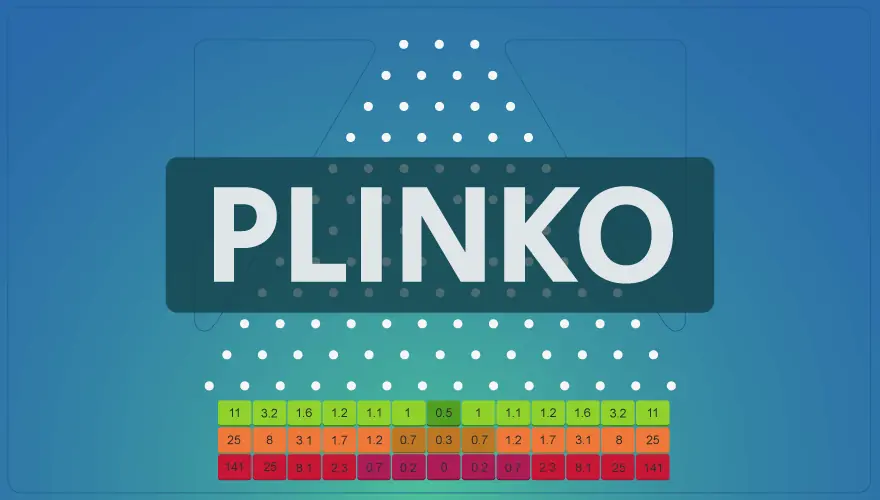
Plinko belongs to a category of online casino games that sits somewhere between arcade simplicity and gambling mathematics. It does not present reels, paylines, card hands, or a wheel. Instead, it gives the player a vertical board filled with pins. A ball is released from the top and bounces left or right as it collides with those pins until it reaches one of the payout slots at the bottom.
That visual clarity is one of the main reasons the format has become so noticeable. In a slot, many players need time to understand symbols, Spinyoo Casino bonus for active players logic, paytable structure, and special features. In Plinko, the core idea is readable in seconds. You see the path. You see the final multiplier. You understand immediately whether the result was small, medium, or exceptional.
But attention does not come only from simplicity. Plinko is compelling because it combines three things very efficiently:
- Instant readability — the result is easy to follow with no cluttered interface.
- Fast repetition — rounds can be completed in quick succession, which changes the rhythm of the session.
- Visible randomness — each bounce creates the feeling that the outcome is still alive until the very last second.
That last point matters more than it may seem. In many casino products, the result is effectively decided before the animation finishes, but the player does not feel involved in the route to the outcome. Plinko creates the opposite impression. Even when the underlying math is fixed by random number generation, the ball’s path gives the player a vivid sense of movement, near-misses, and possibility.
One observation I find especially important: Plinko often feels more “honest” to players than more complex games, even though it is still a game of chance. The reason is not that it is more beatable. It is that the path to the result is easier to see, and that visibility makes the randomness feel less hidden.
How the Plinko mechanics work in practice
At a structural level, Plinko is straightforward. You choose a stake, select a number of rows in many versions, set a risk level, and release the ball. The ball then travels downward through a triangular peg layout. Every collision sends it left or right until it lands in a slot tied to a multiplier.
That is the visual layer. The practical layer is more important.
The center of the board usually contains the most common landing zones, often linked to lower multipliers. The outer edges are harder to reach and are typically where the highest returns sit. This creates the basic logic of the game: the more extreme the payout, the less frequently that result tends to appear.
The board may look like a physics toy, but from the player’s perspective it behaves like a risk distribution system. Each setting changes how wide that distribution becomes. More rows generally mean a longer path and more possible routes. A higher risk mode usually reshapes the multiplier spread so that ordinary outcomes become more common while rare top-end hits become much larger.
| Element | What it changes | Why it matters to the player |
|---|---|---|
| Bet size | Monetary value of each drop | Directly affects how quickly variance is felt in real money terms |
| Rows | Length and complexity of the ball path | Can alter the spread of outcomes and the pacing of suspense |
| Risk level | Shape of the multiplier distribution | Usually has the biggest impact on session volatility |
| Auto-play / repeated drops | Speed of consecutive rounds | Can make swings arrive much faster than the interface suggests |
The path looks dynamic, but the decision-making layer is actually compact. In Spinyoo casino Plinko, as in other versions of this format, players should not confuse visual chaos with strategic depth. The meaningful choices are front-loaded: how much to stake, how aggressive to make the distribution, and how many rounds to tolerate before reassessing.
That leads to a second useful observation: Plinko is not a strategy game dressed as a chance game; it is a chance game that asks the player to manage exposure before the action starts. Once the ball drops, your influence is over.
Why the game feels engaging and how its pace changes over a session
Plinko has a very different tempo from a classic slot. A slot round is usually framed by spinning reels, symbol alignment, and occasional anticipation effects. Plinko strips that down to a short chain of collisions and a landing result. Because of that, the game often feels cleaner and faster, even when the actual time per round is not dramatically shorter.
The engagement comes from repeated micro-suspense. Each peg contact is small, but together they create a sequence of unresolved moments. The ball can drift toward the centre, then suddenly veer outward, then come back again. This makes even modest bets feel eventful. In a slot, a losing spin can feel dead almost instantly. In Plinko, even a low multiplier result can still produce a few seconds of live uncertainty.
On a practical level, the pace of a session depends on three factors:
- Manual versus automatic play — auto sequences can compress bankroll swings very quickly.
- Risk profile — higher settings create longer stretches of underwhelming returns followed by occasional spikes.
- Player expectation — someone chasing large multipliers will often experience the game as harsher than someone aiming for a more measured session.
This is where many new players misread Plinko. Because the interface is minimal, they assume the experience is light. In reality, a fast drop cycle can make it one of the more intense formats in the lobby, especially when high risk is selected. The board looks calm; the bankroll movement may not be.
I would put it this way: Plinko is visually simple but emotionally elastic. It can feel almost casual in one session and surprisingly punishing in the next, depending on the settings chosen before the first drop.
How risky Plinko really is and who is likely to enjoy it
Plinko can be relatively moderate or sharply aggressive. The difference comes less from the name of the game and more from how the player configures it. That is why broad statements like “Plinko is high volatility” are only partly useful. Some versions and settings do produce very uneven result patterns, but others are designed to generate a steadier flow of smaller multipliers.
Still, one thing is consistent: the game is built around uneven distribution. The eye is naturally drawn to the biggest multipliers at the edges of the board, and those top-end outcomes are precisely what can distort player expectations. They are visible all the time, but they are not meant to appear often.
In practical terms, Plinko may suit players who:
- prefer quick rounds and immediate feedback;
- like transparent visuals instead of layered bonus systems;
- understand that many drops may produce modest returns or none of note;
- are comfortable choosing a risk setting and sticking to a limit.
It may be a poor fit for players who:
- want long-form bonus rounds, free spins, or evolving in-game features;
- expect a strong sense of control during the round itself;
- become impatient during dry sequences;
- tend to raise stakes impulsively after misses.
That last point deserves emphasis. Because each drop is so short, Plinko can encourage “just one more” thinking more easily than slower products. A player can go through many rounds before fully registering how the session has developed. At Spinyoo casino, that makes bankroll discipline more important than the game’s simple presentation might suggest.
What to understand about probability, distribution and likely outcomes
Plinko is often talked about as if every slot at the bottom of the board were equally plausible. That is not how the format is usually structured. The central zones tend to be statistically more accessible than the far edges because there are more possible paths leading toward the middle. The extreme multipliers are generally tied to routes that occur much less often.
This means the board should be read as a distribution curve, not as a row of equally likely prizes. Once a player understands that, the game becomes easier to interpret. You stop treating the largest multipliers as realistic short-term targets and start seeing them as rare events that shape the upper ceiling of the product.
Here is a practical summary of how different settings usually affect session feel:
| Session style | Typical setup tendency | Likely experience |
|---|---|---|
| Lower-intensity play | Lower risk, controlled stake, fewer rapid drops | More stable rhythm, smaller returns, less dramatic swing pattern |
| Balanced experimentation | Mid risk, moderate rows, limited auto-play | Mixed results with occasional stronger hits and manageable tension |
| High-pressure chase | High risk, repeated drops, focus on top multipliers | Long cold stretches punctuated by rare spikes; emotionally demanding |
Players should also understand that short sessions can be misleading. A handful of good drops can make the board seem generous. A sequence of poor landings can make it seem broken. Neither conclusion is reliable. Plinko is one of those formats where variance is easy to feel and hard to judge correctly in the moment.
A memorable detail about the format is that near-edge movement can be more psychologically powerful than the final result itself. When the ball drifts toward a large multiplier and then falls back inward, the player often remembers the lost possibility more vividly than the actual payout received. That emotional distortion is part of why the game can feel more dramatic than its interface suggests.
How Plinko differs from slots and other casino games
The clearest difference between Plinko and a classic online slot is structural. Slots rely on reels, symbol combinations, payline logic or cluster systems, and often a network of modifiers such as wilds, scatters, multipliers, and bonus rounds. Plinko removes almost all of that. There are no themed symbol sets to track and usually no layered progression within a round.
That changes the player experience in several ways.
First, the source of excitement is different. In slots, anticipation often comes from the possibility of triggering a feature. In Plinko, anticipation comes from the ball’s route and the slot it will reach at the bottom.
Second, the cognitive load is lower. A player does not need to interpret a paytable full of symbol values to understand what happened. The multiplier is visible and immediate.
Third, the repetition is more exposed. Slots can hide repetition behind changing symbol screens and animated events. Plinko shows the same board again and again. If you enjoy purity and speed, that is a strength. If you need variety, it can become a limitation.
Compared with compare roulette options at Spinyoo Casino, Plinko has more visual pathing and a stronger sense of motion. Compared with blackjack, it offers far less decision-making. Compared with crash-style games, it usually feels less confrontational because the player is not timing a cash-out. Instead, the tension is transferred to where the ball will settle.
So when players ask whether Plinko is “better” than slots, I think that is the wrong frame. It is better for some preferences and clearly worse for others. It trades narrative complexity for directness. It trades feature depth for visible outcome logic. It trades theme for rhythm.
Where Plinko performs well and where its limitations show
Every casino format has trade-offs, and Plinko is no exception. Its strengths are real, but they are specific rather than universal.
The strongest points are easy to identify:
- Clarity — even a new player understands the objective quickly.
- Fast feedback — each drop resolves without unnecessary delay.
- Visible outcome path — the journey to the result feels tangible.
- Flexible session style — settings can make the experience calmer or far more aggressive.
Those strengths explain why Spinyoo casino Plinko can appeal to both curious beginners and experienced players who want a break from symbol-heavy products.
But the limitations matter just as much:
- Limited long-term variety — the board does not evolve much during play.
- Potential for misleading confidence — simple visuals can hide how quickly losses accumulate.
- Thin strategic layer — once settings are chosen, the round itself offers no meaningful intervention.
- High frustration potential at aggressive settings — chasing edge multipliers can become draining.
In other words, Plinko is strong when the player wants immediacy, transparency, and clean pacing. It is weaker when the player wants depth, narrative progression, or the sense that skill can influence the result beyond bankroll management.
What to check before launching a Plinko session
Before starting Plinko, I recommend that players treat the setup screen as the real decision point. This is where the shape of the session is chosen. Once the drops begin, it is easy to slip into repetition without reassessing whether the current configuration still makes sense.
Here are the practical checks that matter most:
- Look at the risk setting first. This often changes the experience more than the stake itself.
- Set a realistic drop budget. Think in number of rounds as well as money.
- Do not judge the board by a short streak. Good and bad runs can both distort perception.
- Be careful with auto-play. It speeds up the session and reduces reflection between results.
- Use demo mode if available. Not to “solve” the game, but to understand its rhythm and emotional feel.
That last point is particularly useful. Demo play will not reveal a secret pattern, because there is no practical exploit hidden in the bounce sequence. What it can reveal is whether the pace and distribution suit your temperament. Some players enjoy the repeated suspense immediately. Others realise within ten minutes that the format feels too bare or too swing-driven for their taste.
Final verdict on Spinyoo casino Plinko
Spinyoo casino Plinko offers a very specific kind of casino experience: fast, readable, visually clean, and more psychologically intense than its minimalist design suggests. Its appeal comes from the contrast at the heart of the format. On the surface, it is one of the easiest games to understand. In real play, the combination of multiplier distribution, risk settings, and rapid repetition can produce very different outcomes from one session to the next.
The key strengths are clear. Plinko gives players immediate clarity, a strong sense of live movement, and a flexible session style that can range from controlled to highly aggressive. It also avoids the clutter that makes some slots feel overbuilt. For players who value directness and quick feedback, that is a real advantage.
The caution points are just as clear. The game does not offer much depth once a round begins, and its simple interface can disguise how quickly bankroll swings develop, especially on higher risk settings or during auto-play. Anyone approaching it as a relaxed low-effort diversion should understand that the emotional pressure can rise quickly when expectations are tied to rare top multipliers.
So, is Plinko worth trying? In my view, yes — if you want a chance-based format with transparent presentation and a sharp, modern rhythm. But it will not suit everyone. Players who enjoy layered slot features, long bonus sequences, or more active decision-making may find it too stripped back. Players who appreciate clean design, instant outcomes, and visible randomness are much more likely to connect with it. Table game fans will get more out of this review after reading Spinyoo Casino blackjack guide for real money casino players.
The most honest conclusion is this: Plinko is not compelling because it is simple; it is compelling because it turns simplicity into tension. That is exactly why some players keep coming back to it, and exactly why others will know after one session that another format suits them better.
FAQ
How does Plinko decide the multiplier after each ball drop?
Each ball follows the board from the drop point and bounces through pegs until it lands in a payout zone. The zone determines the multiplier shown for that round.
What is the risk level on this Plinko game, and how does volatility show up during play?
Volatility describes how often higher multipliers appear compared with smaller outcomes. Higher volatility Plinko can produce longer streaks of lower results before a larger payout zone is hit.
When launching Plinko from the game lobby, what check prevents the most common start errors?
A stable connection and a compatible browser/device help the ball animation and round controls load correctly. If the game does not start, refreshing the lobby and trying again usually clears temporary loading issues.
How does ball speed or timing affect the outcome in Plinko?
The result is determined by the game’s random system for that round, not by manual timing. Pressing launch at different moments only changes when the round starts.
Is a promo code required to play Plinko, or is it only for account offers?
Plinko play does not require a promo code to start the game. Promotional codes apply only when an offer is activated in the account promo area, subject to that promotion’s wagering conditions.